Ecological Core

Moffitt Cancer Center
Core 2: Ecological Core
Ecological Approach and Core Mission
The study of cancer has been transformed by incorporating evolutionary and ecological thinking to explain heterogeneity, behavior, and eco-evolutionary feedbacks. With recent advances in spatial omics, there has been increased interest in exploring spatial patterns and interactions within tumors. As tumors are dynamic, rapidly evolving, and undergoing ecological transformations, understanding tumor progression and response to therapy benefits from studying eco-evolutionary interactions over time. The Ecological Analysis Core focuses on both spatial and spatiotemporal interactions between tumor and the microenvironment to investigate the diverse ecological patterns that emerge from this complex interplay. The Core supports the two Non-Small Cell Lung Cancer (NSCLC)-focused projects of the proposal, with ecological changes over space and/or time (the Δ-Ecology) as a central theme shared by both projects. The Core’s tools have been used to identify potential spatial biomarkers in preliminary data and can define the 3D structure of stromal shelters through whole slide image registration.
Tools and Methods
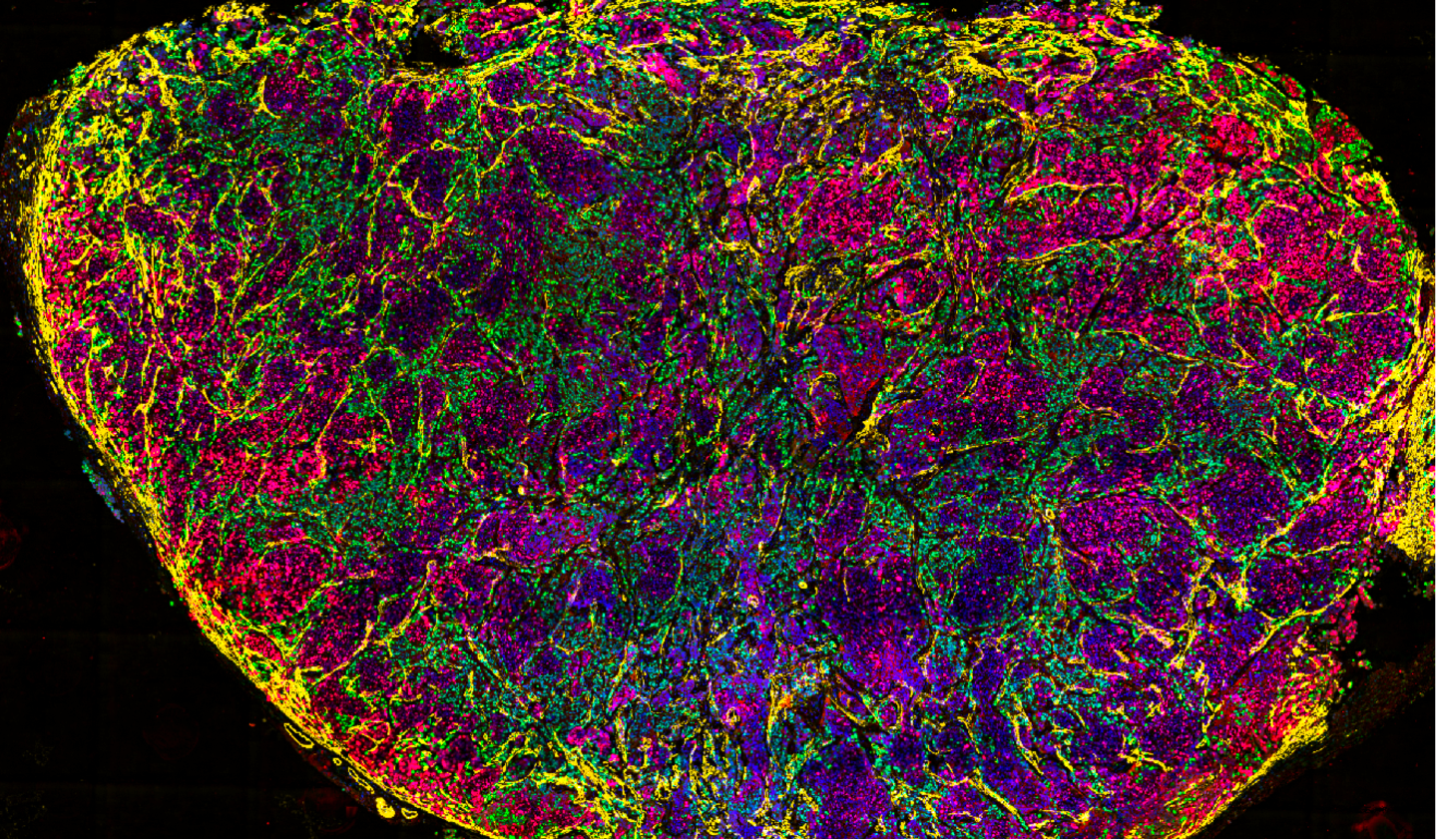
The Core’s pipelines are built on software paradigms emphasizing scalability, generalizability, speed, and platform independence. These pipelines enable interrogation of spatial ecologies present in clinical and experimental histology samples, as well as generation of data to build mathematical models. The Core has recently launched two key tools: VALIS, which aligns IHC and/or immunofluorescence (IF) whole slide images, facilitating the generation of highly multiplexed images (possibly by combining different imaging modalities) and 3D tissue reconstruction; and Mistic, which allows users to view multiple multiplexed images simultaneously, facilitating hypothesis generation. With a rich history in developing and applying ecological models using high-resolution and high-dimensional clinical and experimental samples, the Ecological Analysis Core tools and methods are heavily aligned with the Projects. The insights gained into complex ecological systems by harnessing multimodal multidimensional cancer data enable testing of the hypothesis that diverse eco-evolutionary patterns emerging from spatiotemporal dynamics in the tumor microenvironment are drivers of therapeutic response. This Core includes 3 specific aims:
1 Storing, cataloging and distributing clinical and experimental samples
2 Calibrating, aligning, and analyzing histology from clinical and experimental samples
- Normalizing and aligning multiple stains and tissue slices
- Quadrat-based analysis
- Single-cell-based analysis
- Inferences of the impact and boundaries of stromal niches
- Visualizing multiple images for hypothesis generation
3 Interpreting spatiotemporal ecology from multiplexed imaging
- Identifying spatial and temporal tumor-immune interactions
- Generating ecological predictions from imaging
- Determining genotype-environment associations
- Extracting data for mechanistic mathematical models
See other cores: